




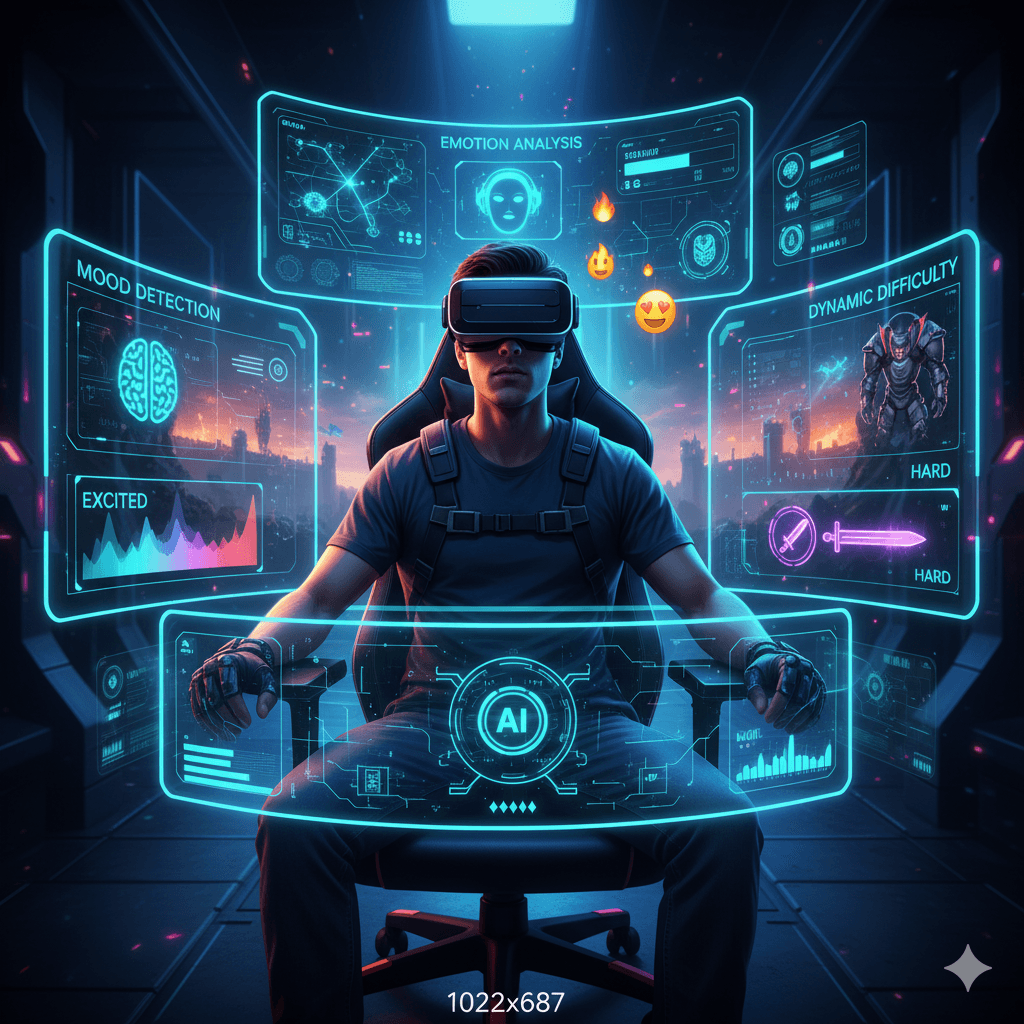
The gaming world is evolving beyond fixed difficulty levels and predictable gameplay. Thanks to advancements in Artificial Intelligence, modern games are becoming dynamic, responsive, and deeply personal.
Today’s AI-powered games analyze your emotions, behavior, reactions, and skill, creating experiences that adapt in real time — making every session unique.
This isn’t just the future of gaming — it’s the future of digital interaction.
Why Adaptive AI Matters in Gaming
AI-powered adaptive systems offer:
- Personalized challenges
- More immersive storytelling
- Balanced gameplay for beginners and pros
- Enhanced emotional connection between player and game
- Higher engagement and longer play sessions
Games no longer just respond to your actions — they understand them.
How AI Adapts to Your Mood & Behavior

1. Emotion Detection Through Gameplay
AI analyzes your in-game behavior to detect your emotional state:
- Are you stressed? It lowers difficulty.
- Are you bored? It adds new challenges.
- Are you excited? It increases pace or action.
Impact: A smoother, more enjoyable experience that never feels too easy or too overwhelming.
2. Skill-Level Learning
AI tracks your performance over time:
- Reaction speed
- Accuracy
- Strategy
- Decision-making
The game automatically adjusts to keep you in the “flow state” — not too hard, not too easy.
Impact: Players stay motivated and improve naturally.
3. Personalized Story & Choices
Adaptive AI tailors narratives based on your decisions, preferences, and behavior.
Two players may experience two completely different storylines — shaped by emotion, speed, and style.
Impact: Deep emotional connection + replay value.
4. Real-Time Difficulty Adjustment (DDA)
If a level is too tough, AI adjusts:
- Enemy intelligence
- Damage resistance
- Puzzle complexity
- Time limits
If you’re breezing through, it boosts intensity.
Impact: Perfect balance at all times.
5. Mood-Based Music & Environment
AI analyzes your pace and reaction patterns to create environments that match your mood:
- Calm if you’re stressed
- Fast-paced if you’re energized
- Suspenseful if you’re focused
Impact: Enhanced immersion and emotional engagement.
Benefits of AI-Adaptive Gaming
| Benefit | Description |
|---|---|
| Personalized Experience | Every player gets a unique journey |
| Higher Engagement | Dynamic challenges keep gameplay fresh |
| Reduced Frustration | Difficulty smooths out naturally |
| Emotional Connection | Games feel more human and responsive |
| Smarter Progression | Skill-based improvements feel effortless |
Real Examples of Adaptive AI in Games
- F.E.A.R. for enemy behavior that reacts to player tactics
- Left 4 Dead uses AI Director for pacing and intensity
- RPGs using emotional modeling for story branching
- Mobile games adjusting difficulty based on session performance
The next generation of games will go even further — using biometrics, voice tone analysis, and real-time feedback loops.
The Future of AI in Mood-Adaptive Gaming
Expect upcoming games to offer:
- Emotion-based NPC reactions
- Adaptive multiplayer matchmaking
- Personalized training paths
- AI tutors that help you improve
- Games that track mental wellness and stress
This is gaming that grows with you — emotionally, mentally, and strategically.
Contact IT Artificer
Website: itartificer.com
Email: info@itartificer.com
Phone: 0333-9296314